
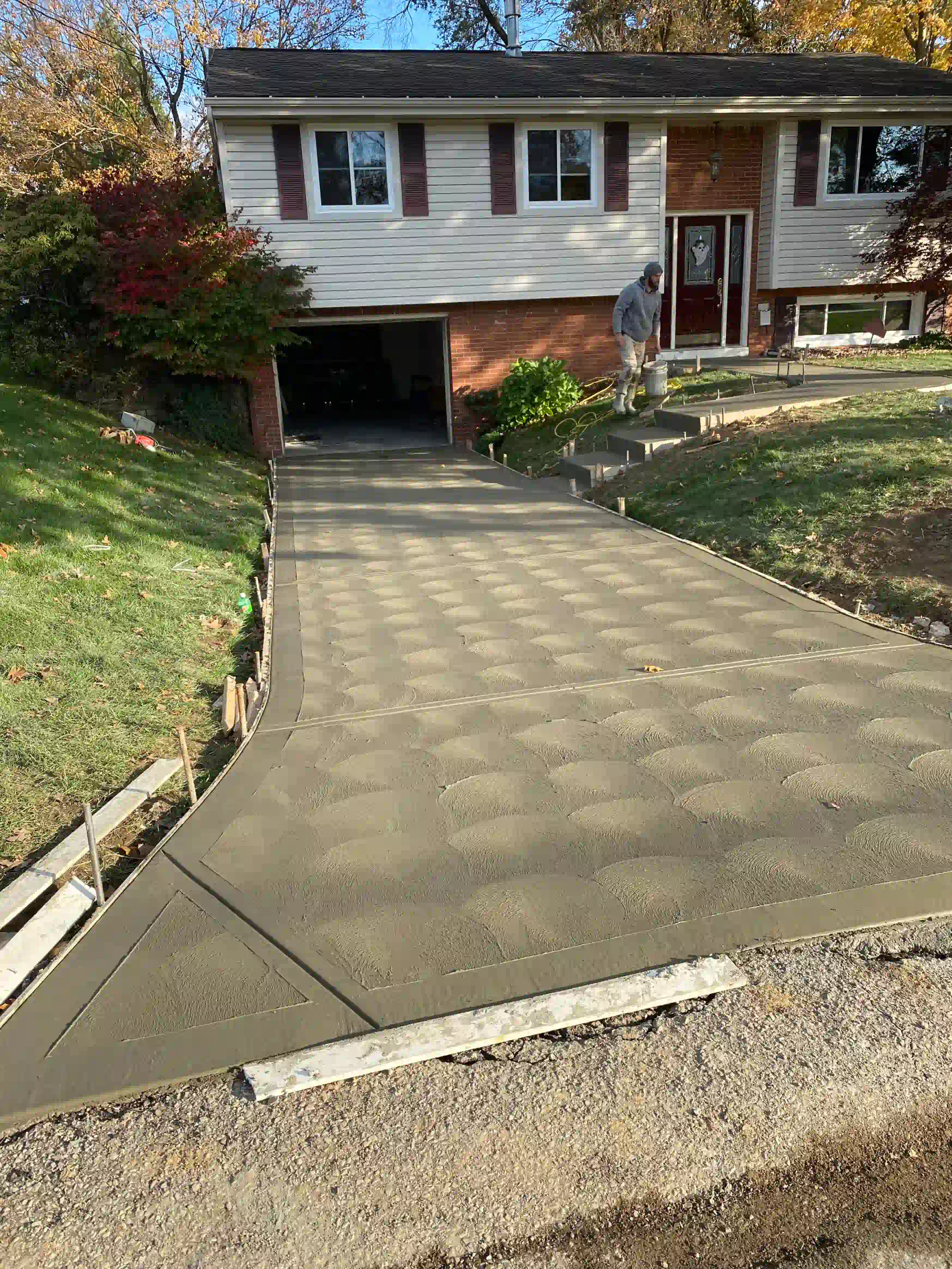
Understanding the Five Mistakes That Destroy Concrete Investments
Concrete work represents a significant financial commitment for any property owner, and mistakes made during installation can transform that investment into a liability. In Cheswick and surrounding Pennsylvania communities, environmental conditions create unique challenges that amplify the consequences of poor concrete practices. Winter freeze-thaw cycles stress the material relentlessly, expanding and contracting as temperatures fluctuate between bitter cold nights and milder days. Ground settling occurs naturally in areas with clay-rich soil composition, placing additional stress on improperly installed slabs. Heavy vehicle traffic on residential driveways, combined with snowplow activity during winter months, tests the durability of every square foot of concrete flatwork.
The five mistakes covered in this article share a common thread: they are entirely preventable with proper planning, quality materials, and skilled execution. Property managers evaluating bids for commercial parking areas often discover that the lowest quote correlates directly with shortcuts in one or more of these critical areas. Homeowners planning patio installations may not recognize the warning signs until cracks appear within the first year. Understanding these mistakes before work begins saves thousands of dollars in premature repairs and replacement costs. Each error compounds over time, reducing the expected lifespan of concrete from decades to mere years. The difference between a driveway that requires replacement after eight years versus one that performs flawlessly for thirty years often traces back to decisions made during the initial installation. Recognizing these vulnerabilities allows property owners to ask informed questions, evaluate contractor qualifications accurately, and make choices that protect their investment for the long term.
Failing to Prepare the Base Guarantees Structural Failure
The foundation beneath concrete determines its long-term performance more than any other single factor. Driveway construction contractors who skip proper excavation or rush the base preparation create conditions for inevitable failure. The process begins with removing unstable topsoil and organic material that will decompose over time, creating voids beneath the slab. In Cheswick’s climate, where frost penetration reaches depths of thirty to thirty-six inches during severe winters, inadequate excavation leaves concrete vulnerable to heaving as frozen ground expands upward.
Proper base preparation requires installing crushed stone in lifts, compacting each layer mechanically to achieve ninety-five percent compaction density. Contractors who simply dump aggregate and spread it without systematic compaction leave air pockets that allow the base to shift under load. This settling appears as diagonal cracks within months, starting at corners where stress concentrates. The base layer serves three functions: it distributes weight evenly, provides drainage away from the underside of the slab, and creates a capillary break that prevents moisture wicking upward through the concrete. When excavation services cut corners by reducing base thickness from six inches to four inches, or by using inferior materials like crushed recycled concrete instead of clean stone, the savings amount to pennies per square foot while the risk multiplies exponentially.
Property owners can identify inadequate preparation by observing the construction process directly. If crews pour concrete directly onto native soil or compact the base with hand tampers rather than mechanical compactors, the installation will fail prematurely. Concrete patio contractors working on backyard projects face the same requirements as commercial work. The base must be level, uniformly compacted, and properly sloped for drainage. Taking these steps adds minimal time to the project schedule but extends the functional lifespan by decades.
Ignoring Water Management Creates Permanent Damage
Water remains concrete’s most persistent enemy, and drainage failures manifest in multiple destructive ways. Standing water on the surface indicates improper slope, while water accumulating beneath the slab creates frost heave conditions during winter months. Concrete driveway contractors must establish minimum slope requirements of one-quarter inch per foot to ensure water runs off rather than pooling. In Cheswick’s spring months, when snowmelt combines with seasonal rainfall, drainage deficiencies become immediately apparent. Puddles that persist for hours after rain signal that the slab was poured without adequate grade consideration.
Beneath the surface, water infiltration causes even more severe problems. Clay soils common in western Pennsylvania expand significantly when saturated, exerting lifting forces that crack concrete from below. Frost heave occurs when water trapped in soil freezes, expanding with enough force to lift entire sections of flatwork. This process repeats with every freeze-thaw cycle, progressively worsening the damage. Patio contractors working on installations adjacent to homes must also consider how water sheds from the structure itself. Downspouts discharging directly onto concrete surfaces concentrate water flow, accelerating deterioration at those points. Proper design incorporates slope away from buildings, perimeter drainage where needed, and consideration of how the entire property manages stormwater.
Correcting drainage problems after installation proves far more expensive than addressing them during planning. French drains, channel drains, or regrading may become necessary when water management was ignored initially. Property owners evaluating proposals should verify that plans include specific slope percentages, drainage details, and consideration of existing site conditions. A concrete repair company can sometimes remediate minor drainage issues, but severe problems often require complete removal and reinstallation. The cost difference between incorporating proper drainage from the start versus correcting it later can exceed three to five times the original investment.
Choosing Inferior Mix Design or Skipping Reinforcement Shortens Lifespan
Concrete specifications directly determine strength, durability, and resistance to environmental stress. The mix design defines the ratio of cement, aggregate, water, and admixtures, with each component serving specific functions. For exterior flatwork in freeze-thaw climates, a minimum compressive strength of 4,000 pounds per square inch (psi) provides adequate durability, while 4,500 to 5,000 psi offers better performance for driveways subjected to vehicle traffic. Air entrainment, a chemical admixture that creates microscopic air bubbles throughout the mix, is essential for freeze-thaw resistance. These bubbles provide expansion space for water as it freezes, preventing internal cracking. Concrete masonry contractors who omit air entrainment or reduce cement content to cut costs create material that will spall and deteriorate within several freeze-thaw cycles.
Reinforcement addresses concrete’s inherent weakness in tension by adding steel that resists pulling forces. Wire mesh provides basic reinforcement for residential applications, but proper placement is critical. The mesh must be positioned in the upper third of the slab thickness during the pour, not laid on the base before concrete placement. Many installations fail because mesh sits at the bottom, providing no structural benefit. Rebar offers superior reinforcement for heavier applications or larger slabs, particularly around control joint locations where cracking is most likely. The spacing, size, and placement of reinforcement should follow engineering principles rather than arbitrary decisions.
Material costs represent a small percentage of total project expense, yet they determine long-term value dramatically. A property owner who accepts a lower bid because the contractor uses cheaper concrete or omits reinforcement will face repair costs that dwarf the initial savings. Professional masonry services specify materials based on project requirements and local conditions rather than cutting corners to meet arbitrary price points. Reviewing mix designs, confirming air entrainment percentages, and verifying reinforcement specifications before work begins protects against this preventable mistake.
Poor Finishing Techniques and Neglected Sealing Waste Previous Investments
Finishing transforms plastic concrete into a functional surface, and the timing of each step determines the final quality. Overworking the surface brings excessive water and fine particles to the top, creating a weak layer prone to scaling and dusting. This commonly occurs when finishers attempt to smooth the surface before bleed water has evaporated, trapping moisture beneath a dense skin. In Cheswick’s humid summer months, when concrete hydration slows due to lower temperatures overnight, proper timing becomes even more critical. The surface must be hard enough to support finishing tools without marring, yet workable enough to achieve the desired texture. Control joints, saw-cut or tooled into the surface, manage where cracks occur by creating intentional weak points. These joints must be cut to one-quarter of the slab depth within twelve to eighteen hours of placement, before random cracking begins.
Curing, the process of maintaining adequate moisture and temperature for proper hydration, is frequently neglected despite its profound impact on strength development. Concrete achieves only fifty percent of its design strength if allowed to dry out during the first week. Proper curing requires keeping the surface continuously moist using wet burlap, plastic sheeting, or curing compounds. Patio contractors who pour late on Friday and return the following Monday often find that weekend heat has robbed the concrete of essential moisture, resulting in a weak, porous surface that will deteriorate rapidly.
Sealing protects the investment by creating a barrier against water intrusion, de-icing salts, and staining. Quality penetrating sealers soak into the surface, chemically reacting to densify and waterproof the concrete without creating a visible film. Film-forming sealers provide additional protection but require reapplication every two to three years as they wear away. Property owners who skip sealing or delay it beyond the recommended timeframe allow water to penetrate the matrix, where it causes internal damage during freeze-thaw cycles. Establishing a maintenance schedule that includes cleaning, resealing, and prompt repair of minor damage extends the functional life of concrete by decades. When problems do arise, working with a qualified concrete repair company early prevents small issues from becoming major structural failures. Taking these final steps completes the investment in quality that began with proper planning and continues throughout the installation process.